
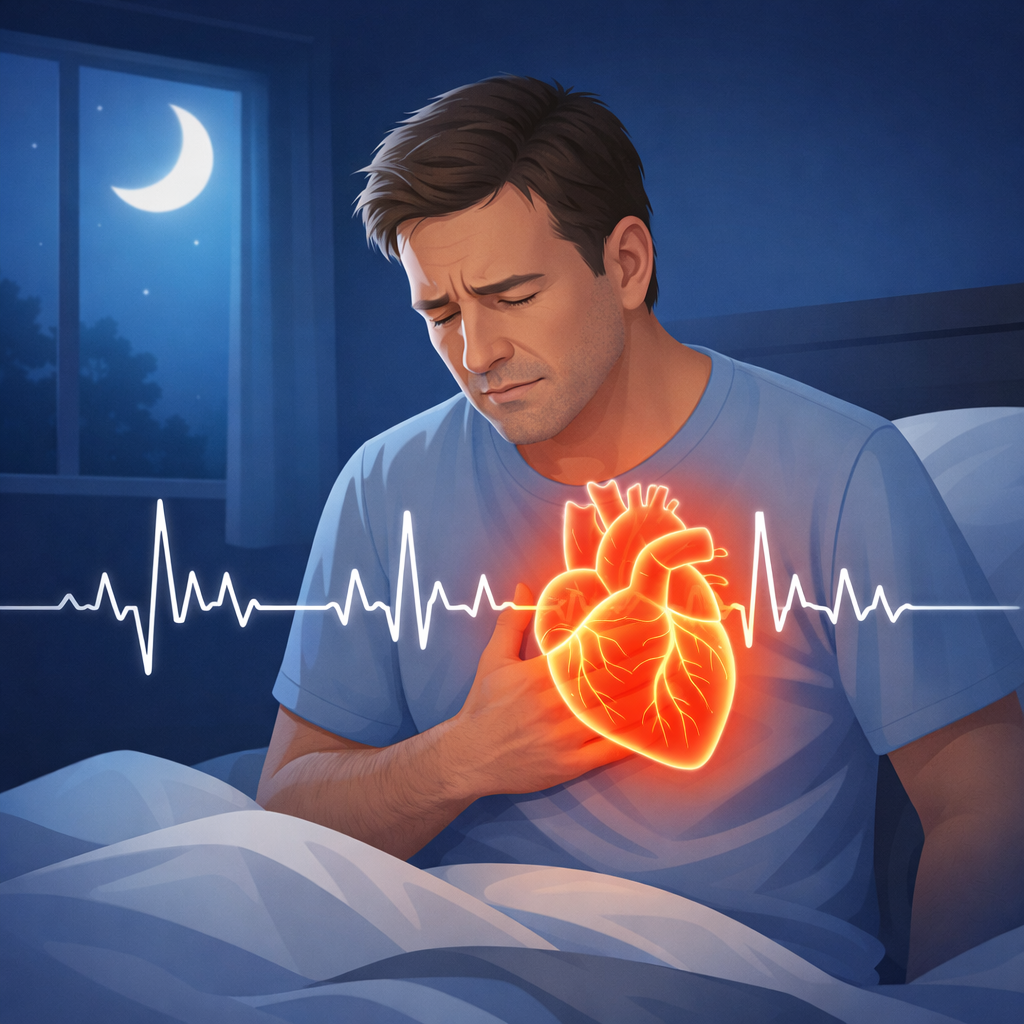
Chest pain that wakes you up at night can be frightening. Many people assume it’s acidity, gas, or muscle strain but in some cases, night-time chest pain can signal an underlying heart problem.
Understanding the difference between harmless causes and serious cardiac conditions is crucial. Ignoring warning signs could delay life-saving treatment.
Why Does Chest Pain Occur at Night?
Night-time chest pain can happen for several reasons. While some causes are mild, others may indicate reduced blood flow to the heart.
Common causes include:
- Acid reflux (GERD)
- Muscle strain
- Anxiety or panic attacks
- Lung conditions
- Coronary artery disease
- Nocturnal angina
- Heart rhythm disorders
The key is identifying whether the pain is cardiac in origin.
When Night Chest Pain May Be Heart-Related
1. Nocturnal Angina
Angina occurs when the heart muscle doesn’t receive enough oxygen. At night, changes in blood pressure and heart rate can trigger chest pain — especially in people with blocked arteries.
Pain may feel like:
- Pressure or heaviness in the chest
- Tightness spreading to the arm, jaw, or back
- Burning sensation mistaken for acidity
2. Coronary Artery Spasm (Variant Angina)
Some individuals experience sudden artery spasms during rest, particularly at night. This temporarily reduces blood flow and causes sharp chest pain.
3. Arrhythmias
Irregular heart rhythms can occur during sleep, leading to:
- Palpitations
- Chest discomfort
- Breathlessness
- Sudden awakening
4. Sleep Apnea-Related Cardiac Stress
Repeated oxygen drops during sleep increase strain on the heart and may trigger chest pain or arrhythmias.
Red Flag Symptoms – Seek Immediate Help If You Notice:
- Chest pressure lasting more than 5–10 minutes
- Pain spreading to arm, neck, or jaw
- Sweating, nausea, or dizziness
- Severe breathlessness
- Sudden irregular heartbeat
These may indicate a heart attack and require emergency care.
How to Tell If It’s Acidity or the Heart?
While acid reflux can cause burning chest pain, cardiac pain often:
- Feels like pressure rather than sharp pain
- Occurs with exertion or stress
- Is associated with breathlessness or sweating
- Does not improve with antacids
If you're unsure, always treat it as a cardiac emergency until ruled out.
Diagnosis & Evaluation
If you experience night-time chest pain, your cardiologist may recommend:
- ECG (Electrocardiogram)
- 2D Echocardiography
- Stress Test (TMT)
- Holter Monitoring
- Coronary Angiography (if needed)
Early testing can prevent major complications.
How to Reduce Night-Time Cardiac Risk
- Control blood pressure and cholesterol
- Avoid heavy late-night meals
- Manage stress
- Treat sleep apnea
- Stop smoking
- Take prescribed heart medications regularly
- Schedule routine cardiac check-ups
Expert Insight from Dr. Soumen Devidutta
“Night-time chest pain should never be ignored. While it may sometimes be harmless, it can also be an early warning sign of coronary artery disease or arrhythmias. Timely evaluation saves heart muscle and lives.”
Don’t Ignore Night-Time Symptoms
If you wake up with chest discomfort, breathlessness, or palpitations, consult a cardiologist promptly. Early detection and treatment significantly reduce the risk of heart attack.
Book your appointment today.
Contact Information
Dr. Soumen Devidutta
Senior Consultant Cardiologist & Electrophysiologist
Apollo Hospitals, Jubilee Hills
For Appointment: 9133409036
Location: https://maps.app.goo.gl/uSqB8aTeBmQseNLu7
Website: www.drsoumencardiologist.com